SHE LOST EVERYTHING — AND THEN IT GOT WORSE: The Heartbreaking Final Chapter of Kirsten Storms That Has All of Hollywood Holding Its Breath

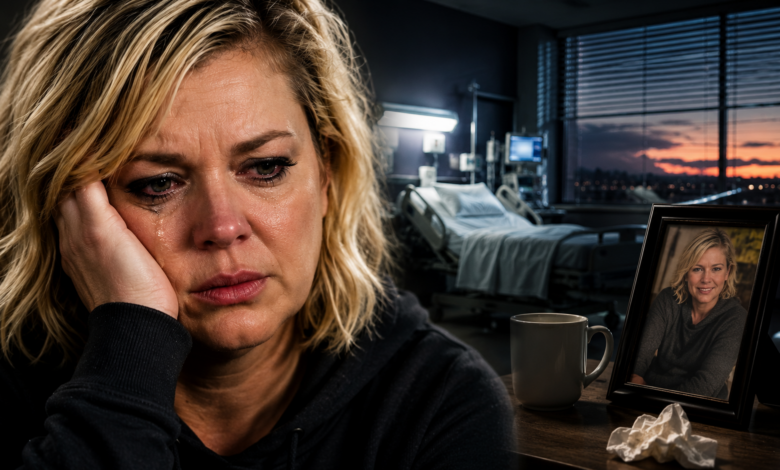
She survived 21 years of soap opera drama. But nothing — not a single script, not a single storyline — could have prepared her for what real life was about to throw at her. This is the story no one wanted to write. And the ending? Nobody knows it yet.
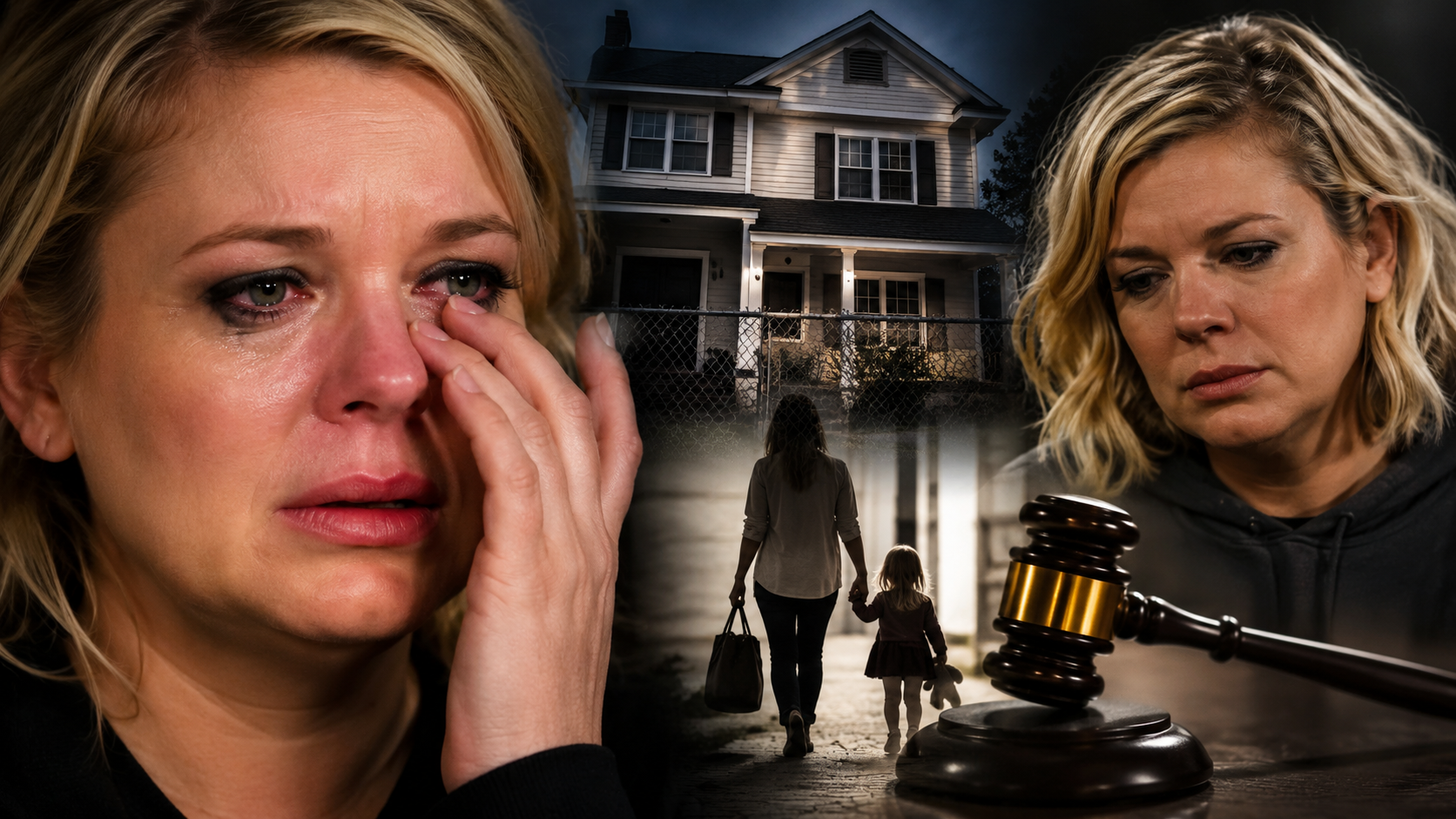
There are celebrities who fall from grace slowly — a quiet fade, a forgotten name, a career that simply runs out of steam. And then there are those who collapse all at once, publicly, painfully, in ways that leave millions of fans frozen in disbelief at their screens.
Kirsten Storms belongs to the second category.
For over two decades, she was Maxie Jones — the beating, chaotic, beautiful heart of General Hospital. She was the woman who survived the unsurvivable on screen: kidnappings, heartbreak, the death of loved ones, near-death experiences, custody battles written into fiction. Fans watched her cry on camera and whispered, “She’s so good at this.”
What they didn’t know was that she was practicing.
Because in real life, the woman behind Maxie Jones was quietly falling apart in ways that no writer’s room could dramatize — and no network could save her from.
THE VIDEOS THAT BROKE THE INTERNET — AND BROKE OUR HEARTS
It started, as so many collapses do in the modern age, with social media.
Earlier this year, Kirsten began posting videos that disturbed even her most casual followers. They weren’t the usual behind-the-scenes clips or cheerful fan interactions that celebrities are expected to produce. These were raw. Unfiltered. Deeply personal in a way that felt intrusive to watch — and yet impossible to look away from.
In one video, her eyes told a story her words couldn’t quite finish. In another, she spoke in fragments, sentences that trailed off into silences heavier than anything she’d ever delivered on a soundstage. Fans flooded the comments. “Are you okay?” “Please talk to someone.” “We’re scared for you.”
She wasn’t okay. And somewhere, deep down, in that place where even the best actresses can’t hide the truth from themselves, she knew it.
What nobody could have predicted was that those videos were not the low point. They were merely the warning shot before the real storm hit.
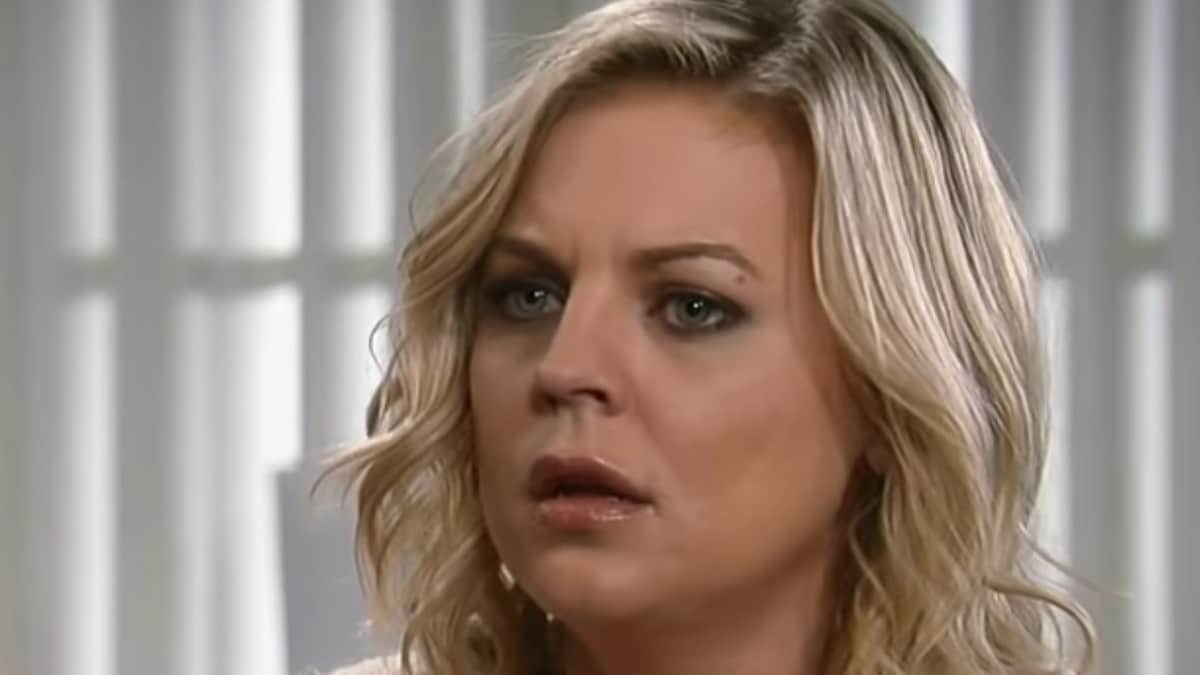
THE DAY EVERYTHING COLLAPSED AT ONCE
Sources close to Kirsten have described what happened next as a “perfect storm of devastation” — a phrase that feels almost too cinematic for something so crushingly real.
Within what felt like weeks, the walls of her life came down simultaneously.
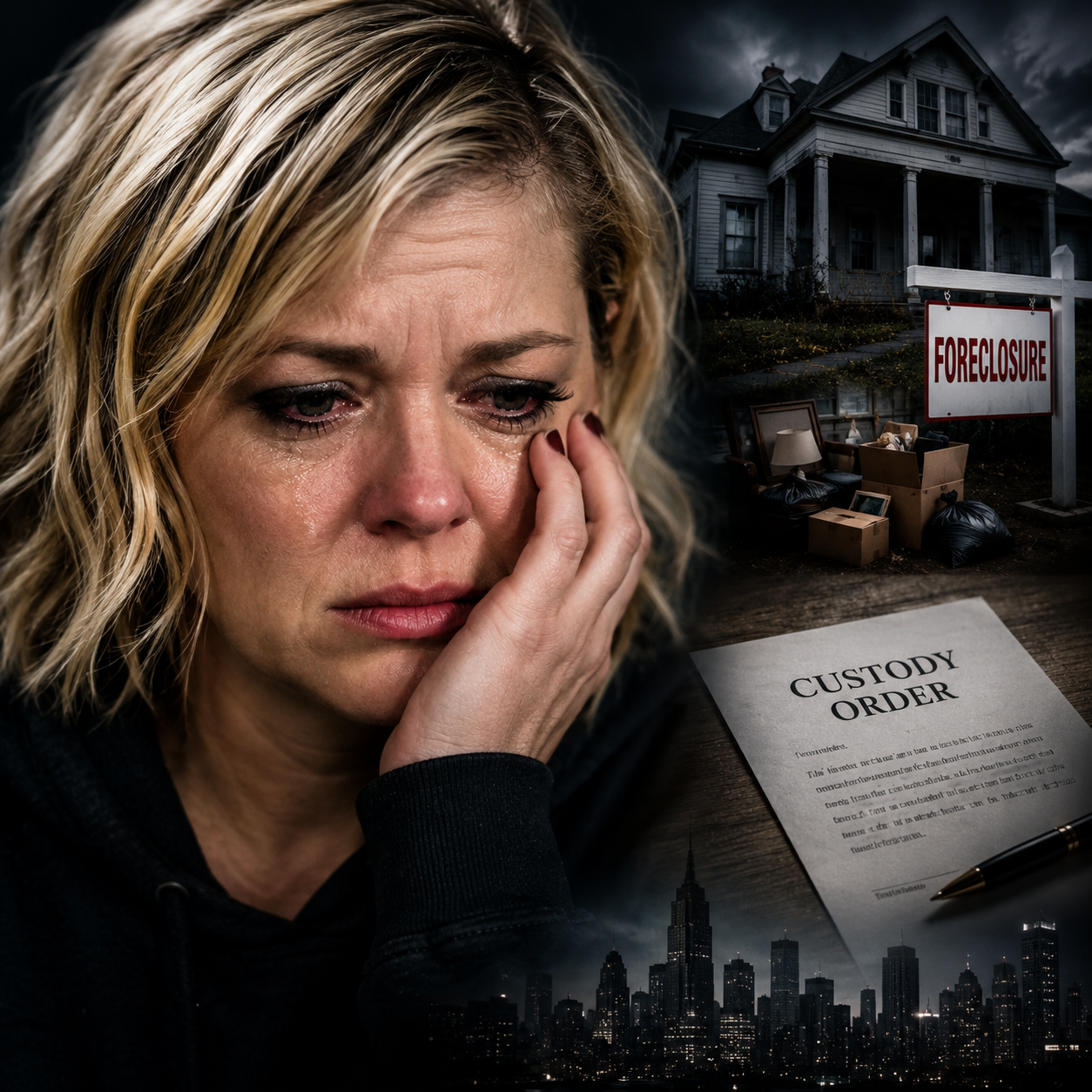
First, the home. The place where she had built her routines, raised her daughter, and retreated from the relentless grind of Hollywood — gone. The financial strain that had been building quietly in the background, invisible to the fans who only saw her on their screens, had finally become impossible to ignore. She was out.
Then came the news that tore through her fanbase like a blade.
Custody. Her daughter. The one constant in a life of professional uncertainty — the little girl who had appeared in careful, loving glimpses on her social media, the living proof that Kirsten Storms was more than a character, more than a ratings number, more than a face on a television screen.
The court proceedings were not kind. Mental health evaluations, documented crises, testimonies that painted a portrait of a mother who was struggling in ways that the law could not overlook. The custody arrangement shifted. Her daughter moved primarily to her father.
Kirsten Storms — a woman who had spent two decades portraying resilience — was left in a home she no longer had, fighting for a child she could no longer hold every night.
And the mental health crisis? It didn’t pause for any of it. It accelerated.
WHAT REALLY HAPPENED BEHIND THE SCENES AT GENERAL HOSPITAL
Here is what the official statements didn’t say — and what people inside the production have whispered carefully, protecting their jobs while clearly carrying the weight of genuine concern.
Kirsten’s struggles were not invisible to those who worked alongside her. For years, colleagues had watched her push through days that would have sent lesser performers home. Chronic health issues — she had been open about her battle with endometriosis — combined with the relentless physical and emotional demands of a daytime drama schedule that would exhaust anyone.
But it was the mental health piece that those closest to her say became increasingly impossible to manage privately.
“She is one of the most talented people I have ever worked with,” one former crew member said, speaking on condition of anonymity. “And she fought so hard, for so long, to keep it together. But there’s only so long you can fight before your body and your mind just say, enough.“
The departure from General Hospital — framed publicly as a “break” — was, according to multiple sources, less voluntary than the network’s carefully worded announcements suggested. The production had reached a point where they could no longer schedule around her absences. The character of Maxie Jones, beloved as she was, needed someone who could show up.
Kirsten, increasingly, could not.
The finality of losing that role — a role she had inhabited for more than a fifth of a century, a role that in many ways was her identity — hit with a force that her support system was not prepared for.

THE MOMENT THAT CHANGED EVERYTHING (AND THE ONE PERSON WHO STEPPED FORWARD)
This is where the story takes its most unexpected turn.
In the weeks following the most acute phase of her crisis — after the home loss, after the custody ruling, after the videos that had fans across the country genuinely fearing the worst — something shifted.
It wasn’t dramatic. It wasn’t a press release. It wasn’t a public redemption arc engineered by a crisis PR team.
It was quieter than that. And somehow, because of that quiet, more believable.
A small circle of people who had known Kirsten across different chapters of her life — former castmates, a childhood friend who had stayed in contact through everything, and a mental health professional she had finally, truly, committed to working with — formed what sources describe as an “unofficial safety net.”
Not a team. Not a brand strategy. Just people who refused to let her disappear.
One former General Hospital castmate — who has asked not to be named but whose concern is described by those close to Kirsten as completely genuine — reportedly reached out privately after the videos went viral. The conversation that followed, by all accounts, lasted hours.
“She needed someone to tell her that the roles don’t define her,” a source familiar with the exchange said. “That Maxie Jones ending didn’t mean Kirsten Storms ending. That’s a hard thing to hear when you’ve been someone for so long.”
Whether that message landed — truly landed — remains to be seen.
THE DAUGHTER SHE IS FIGHTING TO GET BACK
If there is a single thread pulling Kirsten Storms back from the edge, those who know her best say it has a name.
Her daughter.
The custody situation, while devastating in its current form, is not necessarily permanent. Family courts are not in the business of forever — they are in the business of right now, and right now can change. Mental health treatment, demonstrated stability, consistent parenting time — these are the metrics the system watches.
And Kirsten, by every account available, is watching them too.
She has not gone silent on the matter. In carefully worded posts — a marked contrast to the raw, fractured videos of earlier months — she has referenced her daughter in terms that speak to a mother’s obsession with a single goal: getting back to her.
“Everything I do right now,” she wrote in one post that sent her fanbase into a frenzy of supportive comments, “I do for her.”
It is four words that contain multitudes. A therapy appointment kept instead of canceled. A morning routine re-established. A medication regimen followed. A day not surrendered to the darkness.
Four words. A lifeline dressed up as a sentence.
THE DIAGNOSIS NOBODY TALKED ABOUT — UNTIL NOW
For years, the public conversation around Kirsten’s struggles has orbited carefully around vague language: “health issues,” “personal challenges,” “time to focus on wellness.” The kind of language that tells you everything and nothing simultaneously.
But sources close to her inner circle have indicated that what Kirsten has been navigating is significantly more complex than burnout or garden-variety anxiety — the two conditions most commonly projected onto struggling celebrities by a media that prefers tidy narratives.
The specifics remain private, as they should. Mental health diagnoses are not public property. But what those close to her have confirmed is that Kirsten has been dealing with a condition that requires not just therapy and lifestyle changes, but careful, ongoing medical management — and that the road to stability is long, nonlinear, and frequently brutal.
“People think getting better is a straight line,” one source said. “It’s not. It’s five steps forward, three steps back, two steps sideways into a wall you didn’t see coming. She’s on that road. But she’s still on the road.”
That distinction — still on the road — matters more than it might appear.
WHAT HAPPENS NEXT: THE THREE POSSIBLE ENDINGS
Here is the uncomfortable truth that no fan of Kirsten Storms wants to read, but that anyone who has watched someone navigate a serious mental health crisis knows intimately:
There is no guaranteed happy ending.
There are, however, possibilities. Three of them, playing out in real time, while millions of fans watch and hope.
The first: Kirsten stabilizes. The treatment works. The safety net holds. She regains consistent custody time with her daughter. She rebuilds slowly — not back to General Hospital, perhaps, but to something. A life with less camera time and more peace. A quieter version of herself that turns out to be the truest one.
The second: The road gets harder before it gets easier. Setbacks compound. The public pressure of being watched through every stumble makes recovery more difficult, not less. She withdraws further. Progress slows. The story pauses in a holding pattern that breaks the hearts of everyone rooting for her.
The third: She comes back swinging. Not in the way anyone expects — not a tearful interview on a morning show, not a carefully staged comeback appearance at a fan convention. Something entirely Kirsten. Unexpected. On her terms. Proof that the woman who played Maxie Jones for 21 years absorbed more than just her character’s lines — she absorbed her survival instinct too.
Which ending plays out? Nobody knows. Not her inner circle. Not her former castmates. Not the fans who have been following her story since before some of them were adults.
Not even Kirsten.
THE MESSAGE HER FANS ARE SENDING — AND WHY IT MATTERS
In the days and weeks following the most public moments of her crisis, something remarkable happened online.
It didn’t trend in the way celebrity controversies usually trend — with hot takes and judgment and the gleeful cruelty that the internet reserves for its fallen favorites. Instead, it moved differently. Slower. More careful.
Fan accounts that had spent years cataloguing Maxie Jones’s greatest moments pivoted quietly to something else: support threads. Collections of Kirsten’s own words about resilience, gathered from interviews across the years. Messages written not about her but to her, posted publicly in the knowledge that she might never read them — but posted anyway.
“You made us feel seen when we were struggling,” read one message that circulated widely. “Let us return the favor.”
It is, by any measure, an extraordinary thing to witness: a parasocial relationship — normally the object of academic suspicion and cultural eye-rolling — functioning, in this moment, as something that looks uncomfortably like community.
Whether Kirsten feels it is unknown. Whether it helps is unknowable. But it is there. Loud and stubborn and refusing to stop.
THE FINAL WORD — FOR NOW
Kirsten Storms is not Maxie Jones. She never was, not really. But for 21 years, she gave that character everything she had — every tear, every breakdown, every improbable recovery — until the line between fiction and autobiography became, perhaps, dangerously thin.
Now the script has been taken away.
What remains is a woman in her early forties, navigating a mental health system that fails more people than it saves, a family court system that prioritizes stability she is still building, and a public gaze that never fully switches off.
She has lost her home. She has lost consistent time with her daughter. She has lost the role that defined a generation of daytime television.
But she has not, by every account that matters, lost herself.
Not yet. Not completely. And if the people around her — and the strangers online who keep showing up with their quiet, stubborn hope — have anything to say about it:
Not ever.
This article is based on publicly available information and sources speaking on condition of anonymity. Mental health details referenced are inferred from public statements and source accounts, not confirmed medical records. If you or someone you know is struggling with mental health, please reach out to the 988 Suicide and Crisis Lifeline by calling or texting 988.
What do YOU think — will Kirsten make her comeback? Drop your message of support in the comments. Share this story if you believe she deserves to be heard. 💙